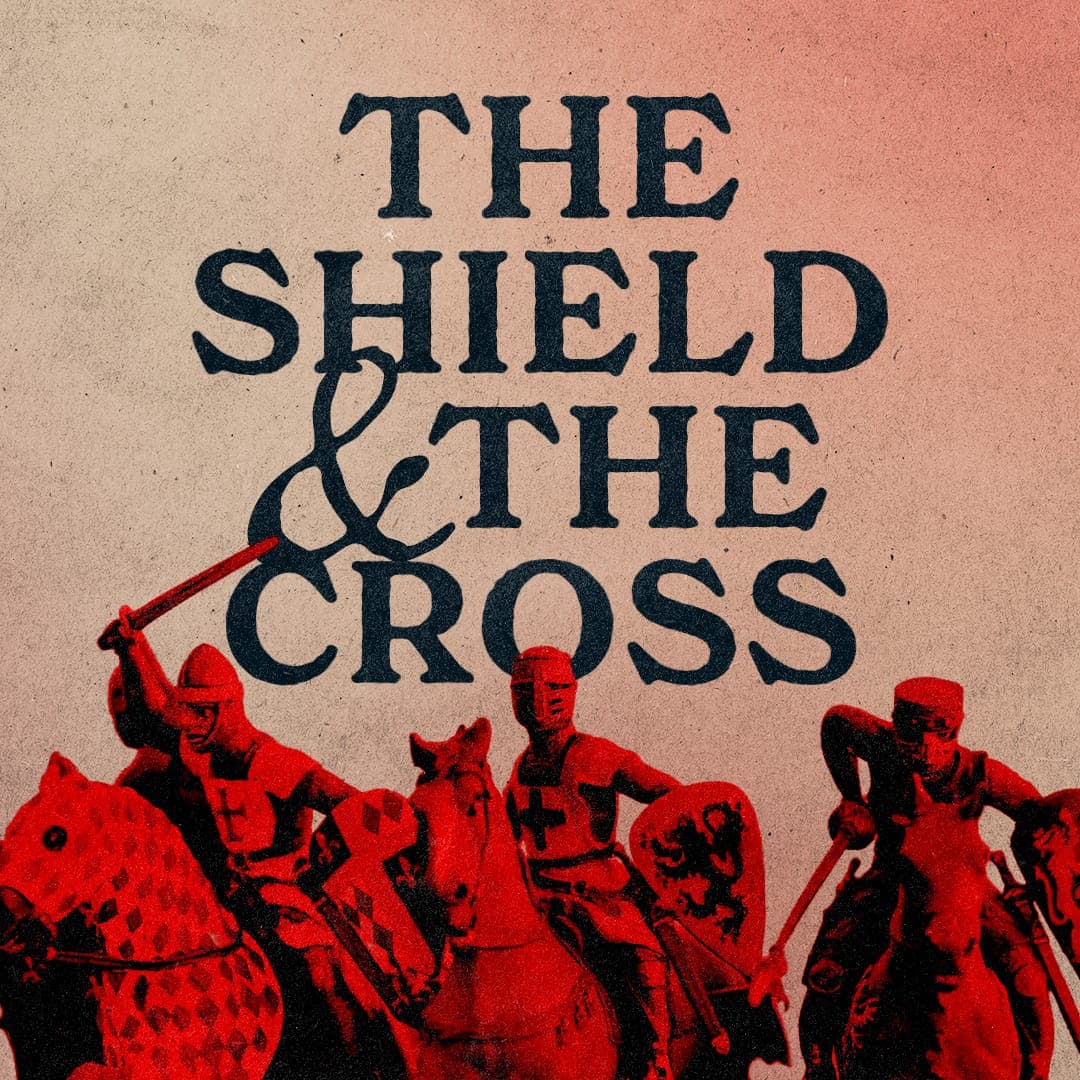
The Teutonic Order: Faith in the Frost
Where earlier knights pursued their vocations in desert heat, later warriors traveled to the cold and wild frontiers of Europe where they established what would become an incredible force for both Christian civilization and cultural advancement.
Transcript
Read the full transcriptAuto-generated · 483 words
When we think of Crusaders, we usually imagine the scorching sun of Palestine and the palm trees of Jerusalem. But there was a group of knights who traded sand for snow and steel armor for heavy woolen cloaks. They are the Teutonic Knights. They wore a black cross on a white field upon their chests, a symbol that would become legendary and feared throughout the Baltic lands. While other orders were retreating from the Holy Land, the Teutonics were building an empire on Europe's wildest frontiers.
Today, we'll discover how a field hospital became one of the most organized powers of the Middle Ages. It all began in 1190, during the terrible siege of Acre. German soldiers were dying not just from wounds, but from disease.
A group of pilgrims from Bremen and Lübeck had an idea. Since they had no building, they took the sails from their ships and used them to construct a makeshift hospital. Thus, the Order of the House of St. Mary of the Teutons was born.
Initially, they were humble nurses, but within a few years, following the example of the Templars, they transformed into warrior monks. But their true mission wasn't in Jerusalem. In 1226, a Polish duke asked for their help in protecting his borders from the pagan tribes of Prussia. The knights accepted, and what began as a protection service turned into the founding of an entire monastic state. The Teutonic Knights weren't just soldiers, they were incredible administrators and engineers. In the heart of Prussia, they built Marienburg Castle, the largest brick fortress in the world.
It was the beating heart of a state, where the Grand Master ruled like a prince, but lived like a monk. Their lives were a continuous march through swamps and ice. They famously clashed with the Russians in the Battle on the Ice at Lake Pipus, where their heavy armor, ironically, became their undoing when the ice shattered beneath their feet.
But their greatest legacy wasn't their battles. They brought agriculture, law, and Christianity to lands that were then unknown. Under their white mantles, Prussia became a center of cutting-edge Christian civilization. Like all earthly kingdoms, the Teutonic state eventually declined, but the order did not vanish.
Just like the Hospitallers, the Teutonics survived through the centuries by transforming themselves. Today, the Teutonic Order still exists as a religious order. The knights of today are priests, nuns, and laypeople dedicated to charity, education, and pastoral care in Central Europe. The Black Cross is no longer a sign of war, but a call to stability and devotion to Mary.
We have traveled between sand and snow, but now it is time to return to the warmth of the Mediterranean sun. In the next episode, we will see how chivalry forged an entire nation. We are heading to Spain for the story of the Reconquista and the Knights of Santiago.
More from The Shield and the Cross
Listen Next


You Might Also Like
Magnifica Humanitas: An Inside Look
An American Pope
A Blessing for America on the 250th Anniversary of Independence
The Virtue of Patriotism

Confirmed: Obamacare Plans Cover Abortion
The Morning LOOPcast

AI Execs Do 180: Beg for Regulation, Viral Texas Indians Pic, And CatholicVote Political Director On Ground Game
LOOPcast