Why Brand New Homes Are Falling Apart | The Deep
America needs more homes… but what if the ones we’re building are falling apart? In this episode of The Deep, Erika exposes the shocking truth behind new construction, from hidden defects to broken incentives, and why Big Building is making the housing crisis worse.
0:00 Intro: New houses are a disaster 1:40 We need more homes 3:01 Why can’t we build enough houses? 4:58 Why prefab fails 6:13 The death of craftsmanship 7:06 Poor quality materials 8:09 Broken market incentives 10:04 How large builders trap new buyers 12:44 How we solve the crisis
Transcript
Read the full transcriptAuto-generated · 2,022 words
America needs more houses. Estimates range from a shortage of 4 to 10 million homes this year. It could take us close to a decade to close that gap. Conventional wisdom says build more homes faster. But what if the homes we build are falling apart? TikTok and Instagram are flooded with thousands of homebuyers' hell videos of outrageous construction. blunders. Inspectors find defects in the overwhelming majority of homes. According to data from the National Association of Realtors, nearly two-thirds of buyers of new construction houses uncover problems during the inspection.
About one in four new homes requires warranty repairs within the first two years, and not all are cosmetic. Some are serious enough to affect the structure, safety, or livability of the home. Brand new doesn't necessarily mean problem-free. It's starting to mean cheap. 30% of all sales today are for new homes, but unlike in times past, buying a new build isn't necessarily a status symbol. It might be a sign that instead of buying the American dream, you've settled for an American nightmare.
Some people say there's no need to worry, because in a free market, quality will correct itself over time as customers demand better. But just how bad are new houses today? What went wrong, and how can we fix it?
There is no doubt we need to build. The American housing stock is aging rapidly. The median age of an owner-occupied house is now 40 years old, up from just 31 years in 2005. Boomers, who own over 40% of all homes in the U.S. and a third of all three-bedroom houses, have taken to aging in place. 61% of them never plan to sell. True to the law of supply and demand, home prices have risen 82% since 2000. That's great news for the existing homeowners.
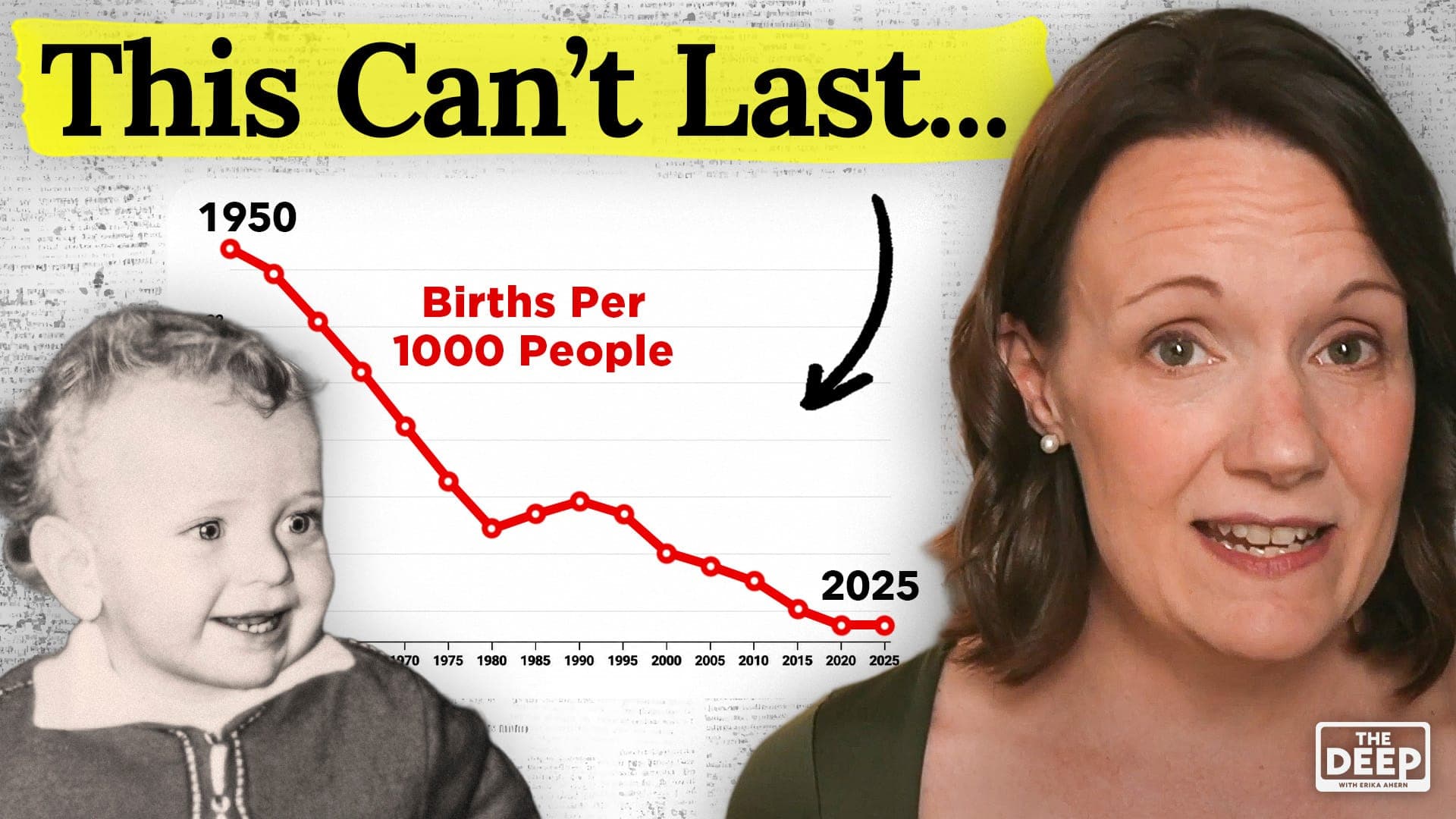
After all, home ownership is the primary source of wealth for millions of Americans. In that same time frame, however, incomes have risen just 12%, making it nearly impossible for younger families to secure a home. Some economists have traced a direct correlation between rising housing prices and declining family formation. Rising home prices reduce birth rates for younger women in their prime childbearing years, delaying the age of first birth, and by extension, decreasing the total number of children in families. The solution? End the shortage.
Bring down the prices. So, why can't we build enough houses? Well, we were the architects, pun intended, of our own shortage. Restrictive zoning, land use regulations, and financial policies have choked supply for decades, even as the demand for homes skyrocketed. The National Association of Home Builders president, Jim Tobin, estimates that 24% of the cost of a single-family home is embedded in regulations at all three levels of local, state, and federal. and federal government. That comes out to roughly $94,000 in regulatory costs for the average home.
Biden-era green energy mandates added another $31,000 to the cost of a new home, further discouraging construction. According to data from the U.S. Bureau of Labor Statistics, productivity in residential construction has essentially stagnated since the late 1980s. In many analyses, it's actually declined. Compare that to other sectors. Manufacturing output per worker has surged. Agriculture has become dramatically more efficient.
Even complex industries like automotive production, once highly manual, are now streamlined. Automated and precise. Housing is the outlier. We are effectively getting far less output per labor hour than we were decades ago. And at the same time, build times have stretched longer, not shorter. So, despite new tools that make the process faster, nail guns, CAD software, prefabricated components, the industry has stagnated. Some analysts attribute that to a lack of innovation.
The big breakthroughs in construction tech were bulldozers, concrete mixers, and cranes, which have been around for about 75 years now. Other analysts decided that the solution is obvious. Prefab. Industrialize housing to make construction more efficient. Mass production worked for cars. It worked for computers. It worked for tchotchkes. Why not single-family homes? That idea has attracted billions in venture capital over the last decade. Companies promised factory-built houses, automated assembly lines, tighter quality control, essentially bringing Silicon Valley logic to construction. And yet… One after another, these companies have failed.
The most famous example is Katerra, a prefab construction venture that raised over $2 billion before collapsing into bankruptcy in 2021. Others like Veve and Blue Homes have struggled or scaled back significantly. The reason is simple. A house is not a car. Construction is not manufacturing adjacent. Every lot is different. Every municipality has different codes. Weather, soil, labor conditions, everything varies, and variation demands attention. It demands craftsmanship. Craftsmanship is the art of applying principles of good construction to particular dynamic situations. It takes experience, innovation, and working with a specific environment to build a solid house.
You cannot prefab those qualities, and if you do, the houses start falling apart. It's why housing resists standardization in a way most products don't, and also doesn't benefit significantly from technological advances in other sectors. The promise of efficiency gains of mass production have not materialized, because the principles of mass production might apply to the things inside your house, and even to the materials making the house. But they can't account for the whole of what it takes to build a beautiful, safe, functioning home.
And in the meantime, something else has quietly eroded. The materials. Talk to experienced builders, inspectors, or engineers, and you will hear a consistent complaint. The materials themselves are getting worse. Modern lumber is typically harvested from younger trees. that have been hybridized to grow faster, but produce lower-density wood. That wood is more prone to warping, twisting, and shrinking over time. Fasteners, nails, connectors, hardware, are often lighter, thinner, and more brittle than their predecessors, like old-cut nails. Large building companies like D.R. Horton are up front.
They embrace cheaper materials. They just call them alternative products on their marketing. Vinyl is in. Hardwood is out. Layer on the widespread use of nail guns and rapid framing techniques, and what you get is a system optimized for speed and, according to the builders, affordability. And that brings us to the keystone of our story arc, the market incentive structure. If the quality is declining, the natural question is, why isn't the free market correcting this? In most industries, Poor quality leads to lower prices, or lost customers.
And new construction prices are now lower than old homes, but they're still really high. As we've seen, housing doesn't behave like a typical market good. Not only does a house resist mass production, but it's also a human necessity. When supply is severely constrained, as it is today, buyers don't have the leverage to demand better quality. They settle, and builders know this. Investigations into major national builders like D.R. Horton and Lennar have revealed a business model that prioritizes speed and volume over craftsmanship.
In one recent report, journalists interviewed dozens of homeowners across more than a dozen states. The stories were strikingly consistent. Foundation cracks, mold, plumbing failures, structural defects. Sometimes severe enough to make homes temporarily unlivable, and the patterns in defects are only half the story. The entire business model is designed to make the new owners pay for the things that break. Robert Knowles, president and founder of the National Association of Homeowners, and himself a licensed engineer, notes that the incentive structure actually encourages shoddy workmanship.
There is no bonus for building the house to code. For quality, Knowles says, there's only bonuses for speed and volume. He estimates that 100% of all new builds probably have multiple code violations. With rates like that, sellers are eager to offload new homes before they're even built and keen to rush buyers through the process. In 2023, approximately 59% of single-family homes sold were purchased before construction was finished, with 17.2% sold Before construction started, and 41.8% sold while under construction. The contracts are structured to limit the ability to sue, force arbitration instead of litigation, and narrow the scope and duration of warranty coverage.
That way, even if the house is defective, the owner's ability to fight back will be limited. And then, there's the warranty structure itself. Standard practice is to tell homebuyers to set aside 1% to 3% of your home value annually to cover potential costs for new construction. For the average D.R. Horton home, which costs $370,000 to $400,000, that means buyers should anticipate spending on the low end $3,700 to $11,100 a year, or having to request that much under warranty. But the major builders set aside far less.
D.R. Horton planned to spend just $2,300 per home in warranty reserves in 2024. Lenar, which leads the industry in accruals, around $3,600. That gap is not an accident. It's intentional. Even when homeowners attempt to use those warranties, the process is often slow, bureaucratic, and adversarial. Repairs are delayed, claims are denied, and in many cases, the clock simply runs out. By the time meaningful action is taken, the warranty period has expired. At that point, homeowners are left with three options. Live with the defect, pay out of pocket, or enter into a long, expensive legal fight.
Most people choose the second option. So, when something goes wrong, the cost doesn't stay with the builder. It gets transferred to the homeowner. What we're looking at is not just a decline in craftsmanship or materials, or general human incentives. It's a structural shift in the housing market, where builders maximize profit by building quickly and cheaply, securing buyers early, limiting legal exposure, and underfunding the long-term accountability. And because demand is so high, and housing is essential, the market allows it. So, yes, America needs to produce more homes, but if we don't address how those homes are being built and who bears the risk when they fail, we are not solving the housing crisis.
We're just scaling it. Economist Leopold Korr wrote in Breakdown of Nations, whenever something is wrong, something is too big. The American housing crisis, from shortages to shoddy construction, is a perfect representation of the world where everything has become big. From the global supply chain sending cheap materials, to the large-scale developers who buy up contractors, to investors trying to fit home building into mass production to feed the shortage, America's aspiring homebuyers will have to face the social scourge of bigness. If a new build is what you can afford, go in with eyes wide open.
Figure out the home's real value, assess potential risks, and educate yourself on repairs. Always insist on an independent inspection and use a realtor. If possible, we should employ independent small businesses when we build, rewarding good craftsmanship and workers who take pride in their products. But individual action won't be enough to address the monolithic business that development has become. It's going to take a political effort, too. Supply-side restrictions are a policy choice. Laws that address supply issues will also free us to make a cultural choice, to re-embrace true craftsmanship.
Federal, state, and local governments need to encourage smaller construction companies and contractors at the local level by slashing regulations for new builds. Ways should also be found to encourage the construction of high-quality starter homes for young families. The proliferation of more smaller businesses in the construction space will also allow buyers to demand higher quality. We can intimidate and threaten big construction with lawsuits, but we must also grow more options for buyers and builders. Capitalism only produces human flourishing if the competitive principle is strong, and that requires, as Core said, the side-by-side existence not of a few large, but of many small entities.
Nowhere is this more true than in building homes where Americans can raise the next generation. It's time to reclaim the human innovation, creativity, and craftsmanship required to raise enough homes that, like a family, are built to last forever.
If you liked this episode, be sure to subscribe to LOOPcast. We bring you a new episode of The Deep every Thursday at 4 p.m. Eastern.
.jpg&w=3840&q=75)