Pope Leo receives nearly 10-minute standing ovation after pro-life speech to Spain’s parliament
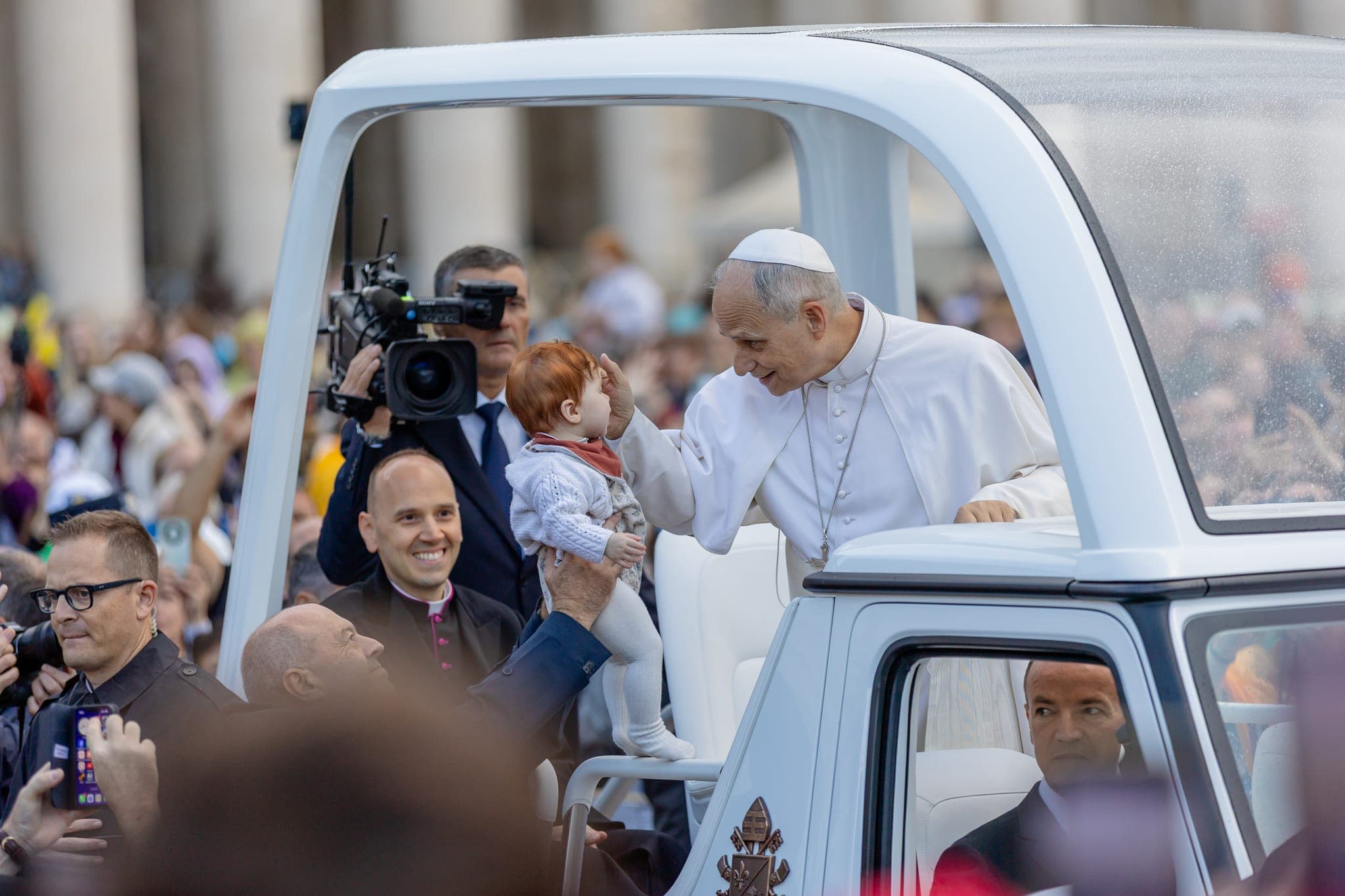
Pope Leo XIV received a nearly 10-minute standing ovation from members of Spain’s Parliament June 8 after he gave a sweeping address that praised key elements of Spain’s heritage and advocated for legislation to be rooted in the protection of human dignity from conception until natural death. Defense of human life, he stressed, is not a partisan issue but rather “a goal of civilization.”

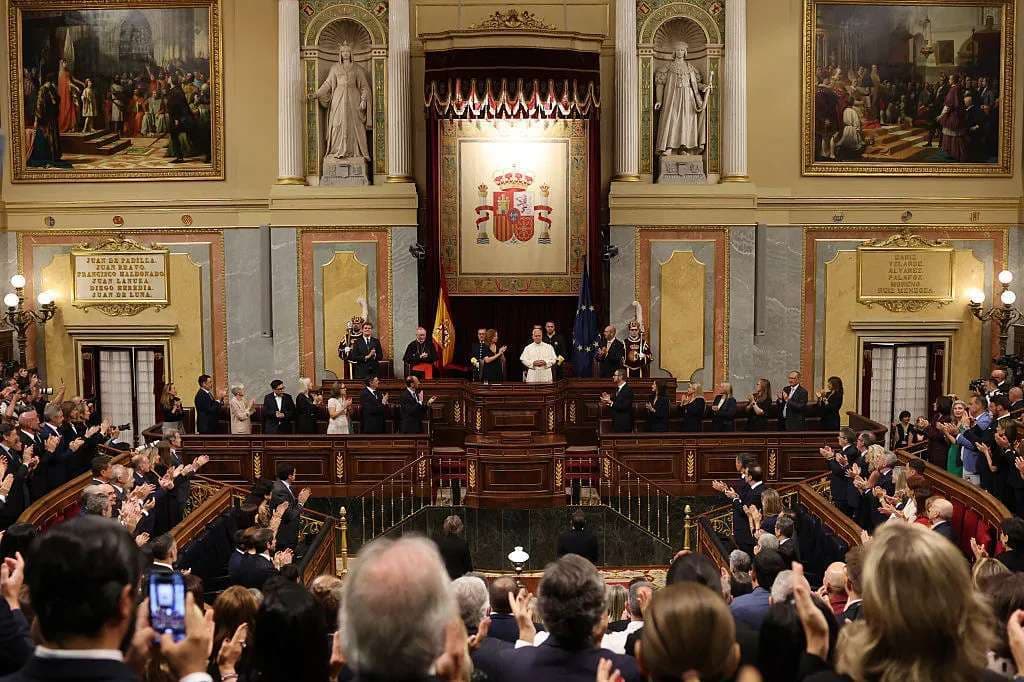
Pope Leo XIV received a nearly 10-minute standing ovation from members of Spain’s Parliament June 8 after he gave a sweeping address that praised key elements of Spain’s heritage and advocated for legislation to be rooted in the protection of human dignity from conception until natural death. Defense of human life, he stressed, is not a partisan issue but rather “a goal of civilization.”
Speaking at the Congress of Deputies in Madrid, Pope Leo said that “beyond the legitimate diversity of positions, every legislative task ultimately confronts a decisive question: what conception of the human person inspires laws, and what kind of society do those laws build?”
“In this regard, Spain has a particularly rich heritage,” he continued, saying its geographical and political identity is connected to a history rich with faith, reason, art, and law.
He also emphasized the importance of legislation serving the dignity of the human person, who is made for God.
“Spain has known how to view the human being as more than just a cog in the social, economic or political order,” he said. “It has recognized the human being as a creature open to truth, endowed with freedom, and driven by a thirst for eternity that no temporal reality can quench — in a word, as someone whose dignity takes precedence over all utility and to whose service legislative action is subject.”
The Pope also underscored the importance of safeguarding fundamental human rights even if it is not popular in a majority. He said that “one of Spain’s great legacies” is “having united historical action with the clarity of moral reason,” citing its efforts to build peace not through “imposition of force” but recognizing human persons. He said that Spain’s Parliament members continue these efforts when they consider “how to ensure that what is possible is just, that what is legal is truly humane, and that the will of the majority safeguards those goods that belong to all and respects that which no majority can legitimately violate.”
He reflected on the legacy of the University of Salamanca, recalling how some 500 years ago religious scholars contributed to key affirmations of human dignity and the limits of human power as new worlds were opening. He later drew a parallel to that historical turning point to the present day, saying that public officials’ work today is shaped amid “new worlds” unfolding in technology, biomedicine, and the economy.
Pope calls for protection of life from conception to natural death
Amid these changes, Pope Leo said, “our discernment must focus on the place of the human person in our decision making and on how the dignity of work, solidarity, social policy and the common good are today being addressed in new ways.”
“This discernment begins with a fundamental affirmation: every truly just society is built upon the recognition of the inviolable dignity of the human person,” he said. “Such dignity precedes any concession by the State and cannot be subordinated to shifting social consensus or the whims of the majority at any given moment.”
Every human being has this dignity, simply because they exist, he emphasized, “and for this reason, it must guide every positive legal system.”
He said that Christianity understands this through Divine Revelation and that human reason can also discern this as a reality of man, and that when this belief is upheld, the law safeguards all people and protects “against the imposition of particular interests and agendas.”
Pope Francis warned against “throwaway culture,” which threatens society, he continued.
“If life ceases to be recognized as a fundamental value, what future can our societies have?” he said. “Can a community that casts into the shadows the unborn child, the elderly, the sick, those who suffer in silence, or those who depend entirely on the care of others be called fully just?
“The defense of human life is neither a partisan issue nor a confessional interest: it is a goal of civilization. Every human life must be recognized and safeguarded from conception to its natural end, in every circumstance of its existence. When this certainty is obscured, the most vulnerable are the first victims, and the law loses its deepest meaning: to serve and protect every person. For this reason, the moral greatness of a nation is manifested, above all, in its capacity to accompany, protect and love those lives that are most fragile.”
He urged the members of Parliament to shape laws according to the common good rather than individual interests and in particular highlighted the importance of protecting family life. He also emphasized the importance of education, while noting that collaboration between educational institutions and families must always respect the family as the primary educator of children.
Migration and AI in the military
The Pope also highlighted what he described as the urgent moral and legal issue of migration, saying the situation of migrants and refugees requires focusing on people, going “beyond the mere management of migration flows,” and addressing the root causes forcing their flight. He called for both the safe and legal pathways to be offered and the promotion of “the right to remain in one’s own land” by working to mitigate the reasons causing people to leave. The Pope also drew attention to the dangerous routes that make people vulnerable to traffickers and smugglers and called for stronger prevention and rescue assistance for victims.
He also decried discrimination against migrants and refugees, saying, “Wherever people are discriminated against because of their national, ethnic, religious or linguistic origin, or because of their economic or social status, the universal principle of the equal dignity of all human beings is seriously violated.”
Addressing challenges in the international realm, the Pontiff highlighted the importance of pursuing peace through dialogue, justice, and respect for international law. In particular, he called for “rigorous oversight” of artificial intelligence (AI) in the military to ensure that life-and-death decisions are “never left to automated systems nor removed from the moral responsibility of the human person.”
Freedom of conscience and religion, and protecting the Seal of Confession
Emphasizing that peace is also a fruit of conscience, he turned to focus on the importance of protecting freedom of conscience and religion. Freedom, he explained, “does not simply mean being free from coercion or having many choices; it means being able to recognize the good and commit to it responsibly.”
“For this reason, every truly free society also requires a proper limitation of public power, so that the freedom of individuals, communities and associations is not unduly restricted,” he said, referencing Dignitatis Humanae. “From this perspective, the legitimate autonomy of the temporal order must never see itself as hostile to religion. Faith does not seek to impose itself through privileges or coercion; yet neither can it be silenced as if it were irrelevant to public life.”
In light of this, the Seal of Confession is especially important to the Catholic Church, Pope Leo said.
“It is part of the broader sphere of religious freedom, which guarantees believing communities their own space for life, organization and internal discipline,” he said. “To protect it legally, as is done in a similar way in some professions, means preserving a sacred space of inner freedom, where the believer can open his or her soul to God without fear of external pressures, as international norms also recognize.”
The Pontiff concluded by praying for Spain’s prosperity and calling for a moral renewal, emphasizing that Spain can contribute significantly to this through its language and spiritual, legal, and cultural tradition. He also encouraged the lawmakers to reflect on how modern freedom has been cultivated through “a long education of conscience, deeply marked by the Christian tradition,” and reiterated his message of rooting the law in human dignity.
“Law must serve the good, that justice sets limits on force, that power requires legitimacy, that the poor belong fully to the community, that the foreigner must be welcomed in accordance with his dignity, and that human life can never be treated as a commodity.
“A law does not attain its true greatness merely by having been formally enacted; it attains it when, in addition to being valid in form, it can stand before the dignity of the person and pass that test without shame.”
.jpg&w=3840&q=75)



Comments