The Age of Liberal Priests is Officially Over
In this episode of The Deep, Erika breaks down the recent study from the Catholic Project that shows a consistent shift among younger priests towards more conservative and traditional views. What do the numbers actually show? And does this shift reveal a hopeful future for the church?
Sources:
Associated Press. “‘A Step Back in Time’: America’s Catholic Church Sees an Immense Shift Toward the Old Ways.” Associated Press, May 1, 2024. Accessed November 4, 2025. https://apnews.com/article/7638fa2013a593f8cb07483ffc8ed487.
Catholic Project. NSCP Wave 2 Final Report. October 2025. Accessed November 4, 2025. https://catholicproject.catholic.edu/wp-content/uploads/2025/10/NSCPWave2FINAL.pdf.
Catholic Vote. McKenna Snow, “Looking at Pew Numbers: ‘Baby Boomer’ Catholics Have More Liberal Views Than Millennials.” CatholicVote.org, April 19, 2024. Accessed November 4, 2025. https://catholicvote.org/baby-boomer-catholics-have-more-liberal-views-than-millennials/.
Florida Atlantic University News Desk. Gisele Galoustian, “The ‘Taboo’ of Retirement for Catholic Priests.” Florida Atlantic University News Desk, July 7, 2016. Accessed November 4, 2025. https://www.fau.edu/newsdesk/articles/Catholic-Priests-Retirement.
Georgetown University. Mary Gautier et al., “Average Priest Age Now Nearly 20 Years Older Than 1970.” Georgetown University News, June 1, 2012. Accessed November 4, 2025. https://www.georgetown.edu/news/average-priest-age-now-nearly-20-years-older-than-1970/#:~:text=Average%20Priest%20Age%20Now%20Nearly,studies%20about%20the%20Catholic%20Church.
National Catholic Register. “The Return of Altar Rails.” National Catholic Register, n.d. Accessed November 4, 2025. https://www.ncregister.com/features/the-return-of-altar-rails.
National Catholic Reporter. “While Out of Sync: Lay Catholics Conservative, Young Priests Are Future U.S. Church.” National Catholic Reporter, n.d. Accessed November 4, 2025. https://www.ncronline.org/opinion/guest-voices/while-out-sync-lay-catholics-conservative-young-priests-are-future-us-church.
The Catholic Herald. “Bishop Bans Use of Altar Rail at Charlotte Catholic High School.” The Catholic Herald, n.d. Accessed November 4, 2025. https://www.catholicherald.com/article/bishop-bans-use-of-altar-rail-at-charlotte-catholic-high-school.
Transcript
Read the full transcriptAuto-generated · 2,443 words
Today's younger priests are the most conservative in living memory. Not only that, for the first time in 60 years, the average American priest's top pastoral priority is Eucharistic devotion. The data is striking, confirming a general feeling among Catholics of a sharp generational divide among our priests, and among us all. As I was digging through, I realized that calling these numbers a revolution Is an understatement. But I also found a few red flags that we ignore to our own peril, and I'll get into those.
Since the sexual abuse scandals and the large-scale closure of parishes began in the early 2000s, the Catholic laity have been treated to an endless stream of managed decline messaging. We talk about the vocations crisis the same way we talk about the weather. Parish mergers, school closures, and overflowing priest retirement homes all contribute to a sense that the Catholic moment is over.
But is it really? It turns out that while the numbers are sobering, the story isn't all decline. A new 2025 study from the Catholic Project confirms that this isn't just a blip. It's a long-term, robust trend. Younger priests are far more conservative, both politically and theologically, than their predecessors. And that's a big deal for the future of the Church in America. While the boomer priests of the 1970s and 80s mostly rode the cultural revolution waves with the rest of their generation, their successors are pulling hard in the opposite direction.
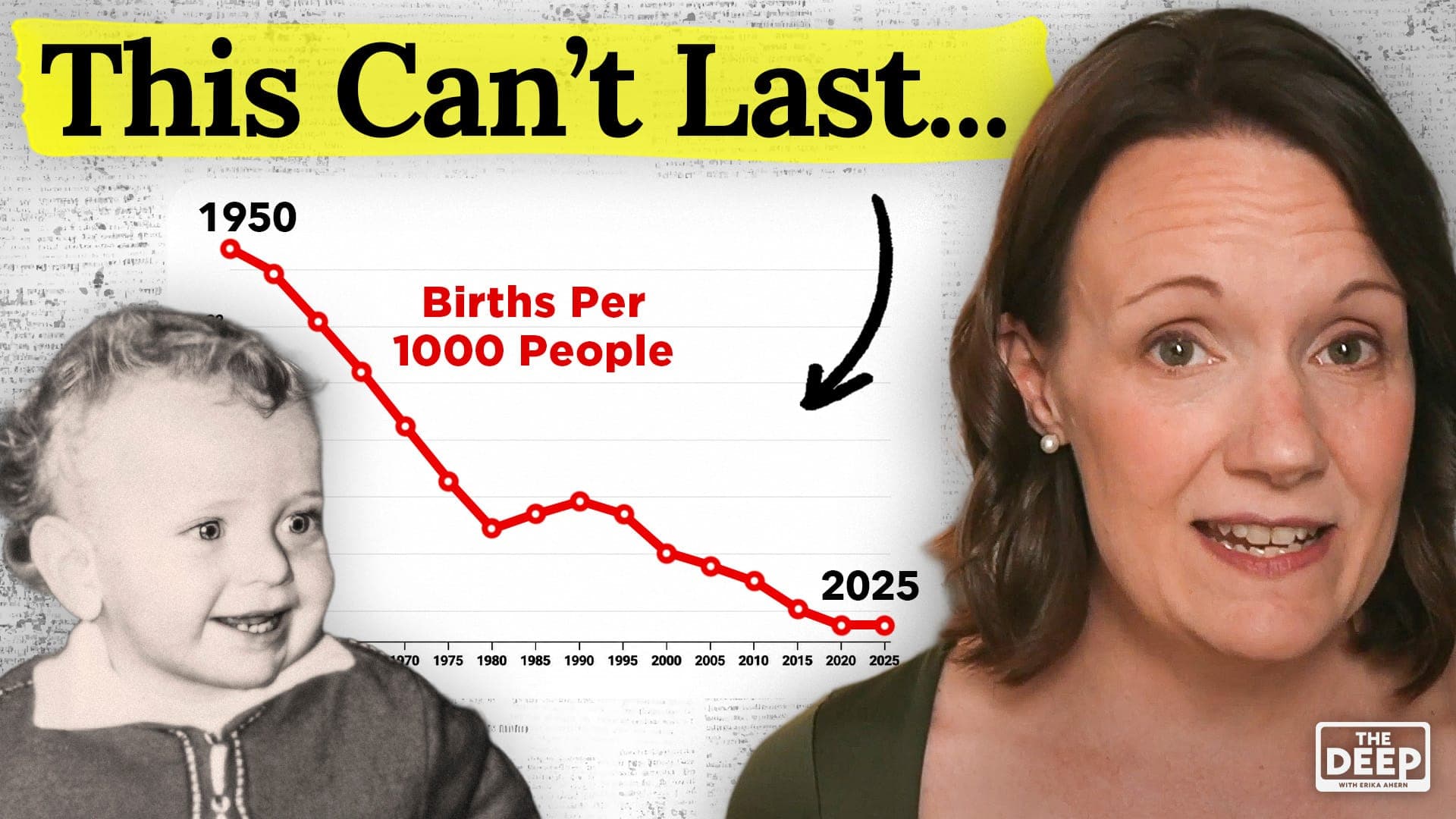
If the number of Catholics is smaller, the priests leading them are of a different kind. We are watching. We are part of an inflection point in the history of American Catholicism. This is the story of our own new counter-reformation and the young priests who are leading the way. Numbers aren't everything, but they keep us honest. And when it comes to the American priesthood, they tell a riveting story. Most Gen X and Millennials grew up with pretty bleak numbers. If you were a Catholic born in 1985, you were baptized by one of over 52,000 priests in the United States at that time.
By 2020, when you turned 35, there were just 25,000 diocesan Catholic priests left. The average age of an active priest has also increased significantly over time, reaching an average of 63 in 2009 compared to 35 in 1970. In 2019, half of all active priests were at the mandatory retirement age of 70. But as the number of priests shrank and aged, something else was going on beneath the surface. And now, we can see clearly what it was. A slow, quiet revolution.
More on based priests in a minute, but first, a word from Holy Heroes. Did you know that the Catholic Church recommends a powerful way to protect your home and everyone in it from evil? Holy Heroes has your complete kit with everything needed for the traditional home blessing, plus this recommended protection. Here's what's unique about this home blessing and protection kit. It includes a stand-up Saint Benedict medal to display in your home. Did you know that the Saint Benedict medal is the only Catholic medal blessed with a prayer of exorcism?
And that there are documented instances of it defeating evil spells, curses, and other attacks. Did you know that witches have testified they cannot penetrate places protected by the St. Benedict Medal? So, for your home and the homes of your loved ones, get the Holy Heroes Home Blessing and Protection Kit to bless and protect. Get it at holyheroes.com backslash home blessing, holyheroes.com, helping you bring the joy of the faith to your family. And now, back to those based new priests. The first data point has to do with priests' political views.
No surprise. Among priests ordained before 1975, 61% identified as liberal, 25% moderate, and only 13% conservative. Among priests ordained in the late 1970s, the number of conservatives shrank even more, to just 11%. The 1980s and 1990s cohorts exhibit some growth among conservatives, but a majority of priests from those decades still identify themselves as liberal or moderate. But then, the political affiliation begins to swing. Hard.
For priests ordained in the early 2000s, we have 44% describing themselves today as conservative, 44% as moderate, and only 12% liberal. And among priests ordained since 2010, just over half, about 51%, identify as politically conservative or very conservative, while 37% call themselves moderate, and just 12% say they're liberal. When it comes to theology, that substantial moderate middle disappears, and the general polarization is even more extreme. Among priests ordained before 1975, more than 70% described themselves as theologically progressive, while in the 2010 or later cohort, only 8% did so.
By contrast, over 70% of the youngest priests describe themselves as either conservative orthodox or very conservative orthodox, leaving only about one in five in that middle of the road. To get a deeper insight, I talked to Stephen White, executive director of the Catholic Project, who gave me an important caveat to remember when you're looking at these numbers. In surveying priests, researchers left the interpretation of conservative, liberal, and progressive. Up to the priests themselves. These numbers aren't telling us that young priests are all diehard Trumpers or boomer priests love Obamacare.
But the trend toward conservatism and orthodoxy is undeniably significant and longstanding. The Catholic Project ran this same survey three years ago with the same respondents, making the 2025 numbers all the more robust and remarkable. The generational gap isn't just politics or theology. The differences spill over into pastoral priorities as well. The priority given to climate change, immigration, LGBTQ outreach, and social justice activism drops sharply across ordination cohorts. Among priests ordained before 1980, 77% say synodality should be a pastoral priority. That falls to 57% For those ordained between 1980 and 1999, and just 37% for priests ordained after 2000.
Younger priests, meanwhile, are focusing elsewhere. At the top of their list, Eucharistic devotion. A striking 88% said promoting love for Christ truly present in the Eucharist is their top priority. By contrast, older priests ranked Eucharistic devotion near the bottom. Just above access to the traditional Latin Mass. The older generation, it seemed, was more worried about processes and programs. The younger ones worry about adoration. That's not decline. That's reformation.
Not everyone is excited. In his commentary on the survey results, Father Thomas Rees, the Jesuit who formerly headed America Magazine, sees trouble ahead. He warns that these new conservative clergy are out of sync with the Catholic laity. Here are his numbers. Among weekly mass attending laity, 40% support women's ordination, 72% support contraception, 71% IVF, and 59% think of the Catholic laity as being out of sync with the Catholic laity. Unmarried couples should be permitted to receive Holy Communion. Father Reese warns that if priests push their agenda without listening to the laity, attendance and Catholic identity risk further decline.
But humor me here, what if it's not an agenda? What if the older generation was the experiment, and the young priests are simply being Catholic? It's not just the priests. The laity themselves are changing, too. While many continue to leave the Church, the younger Catholics who stay are embracing confession, larger families, reverent liturgy, and clear moral boundaries. They're moving away from the Spirit of Vatican II casualness. Now, I'll be real. The numbers are still not great. When asked about contraception, 85% of Catholic boomers supported it, compared to 80% of 18-49 year olds.
On married priests, it's 73% versus 65%. On the one hand, this says the majority of Catholics are still poorly catechized and unevangelized when it comes to the Church's moral teaching. It's true. The generational divide among the laity isn't nearly as dramatic as what we just saw among the clergy. That disconnect between young priests and young Catholics? Sure, Fr. Reese is pointing to a real challenge. But the tide, it seems, has turned among the laity in the same direction as it has turned among our priests.
It may even become convergence. And isn't it right that the clergy should outpace the laity in reforming the church? Our future bishops should be the ones who challenge the faithful and teach us what it means to be Catholic disciples of Christ. That being said, I see two challenges for priests that Fr. Rees missed or left out of his analysis. The first is navigating these early decades of ministry under older bishops without causing scandal or falling into bitterness. Need an example? Just take a look at these recent stories.
about the liturgical third rail of our time, altar rails. In the last two years, altar rails have made headlines in the Catholic world. In Charlotte, North Carolina, Bishop Michael Martin banned the use of altar rails for the reception of the Eucharist. Was he finally getting the diocese on board with post-Vatican II changes? No. The rail in question had been reinstalled only eight years prior, and was, quote, Warmly welcomed by families, clergy, and students, who saw it as a visible sign of continuity with the Church's tradition.
The younger priests, families, and students of the diocese desired reverence, tradition, and Eucharistic devotion. The decision by the 63-year-old bishop, who was ordained a priest, I will note, in 1989, to forbid its use, is just one example of what the numbers are telling us.
In the Archdiocese of New York, a similar clash between generations emerged. In December of 2024, the Vicar General's office reminded pastors that altar rails were not to be restored, as they might, quote, suggest a posture other than the germ's stated norm, standing, for receiving communion. The note ended, quote, No one is sure where the impetus for this is originating, but it seems to be picking up a bit of steam. The Vicar General, Monsignor Joseph P. Lamorte, was ordained in 1981. His memo's comment is telling.
It seems puzzled that anyone would want altar rails back, surprised the idea is spreading. It reveals a deep generational divide, and the confusion, even resentment, it breeds. And that's dangerous for the Church. The young must not grow bitter toward the old, nor the old fear the young.
The very fact that priests are so divided by generation is part of our era's unique challenge. As in the public square, human flourishing depends on friendship between generations. How much more in the church, where spiritual flourishing demands healing with our elders?
Can those wounds heal? That's the question young priests and young Catholics must face daily. The other great challenge lies within our own hearts. The youngest priests track with the rest of Gen Z when it comes to loneliness. The same 2025 study from the Catholic Project uncovered a sobering stat. About 45% of priests ordained after 2000 scored high on the UCLA loneliness scale. That means they often reported lacking companionship, feeling left out, or isolated. When I asked Stephen White about this, he told me, we don't exactly know what the causes are.
People 40 years old and younger are just, in general, more depressed, anxious, and isolated. He added that priests, like all Catholics, quote, are men of their generation and face the same challenges many of their age group do. And that's true. The same screens, the same fractured families, the same disappearing social networks that plague Gen Z plague their priests. And remember, many of these young priests serve in dioceses with dwindling resources, especially in areas where parishes are emerging faster than you can say coffee and donuts.
The young priests' swing toward orthodoxy is a hopeful sign, a return to Eucharistic devotion, concern for the poor and the unborn. Yes, they face challenges. Fewer resources, longer assignments, older priests who don't understand their love for the Eucharist. But they also bring unique strengths. They grew up during the sex abuse scandals. They know the priesthood is not a glamorous job. They're poorer. Their parishes are poorer. And in the calculus of the Catholic faith, we know that that is a strength. They are more connected to centuries of tradition, and they love Jesus Christ, truly present in the Eucharist.
So, what does this generational turn mean for the rest of us, ordinary Catholics juggling jobs, kids, and politics? First, it means don't give in to the manage-decline narrative. Yes, there are fewer priests, but the ones we have are more committed, more prayerful, and frankly, more likely to stay faithful to church teaching.
Second, it means the future church may look smaller, but sturdier. Parishes might merge, but those that remain could be powerhouses of Eucharistic life. Get to know the First Counter-Reformation after another massive exodus from the church. We saw some of the greatest saints and revivals in salvation history from that diminished church. Third, the new priests need you, the new laity. If they are telling us they're lonely, that their parishes lack resources, we should believe them, and we should act. Invite them for dinner.
Bring them food. I sound like an Italian grandmother. Show up at parish events and talk to the priests. Ditch your travel teams with your kids so that you and your kids can take on the youth group. If Father is laying down his life so you can receive the sacraments, maybe you and your family can lay down something of your busy life to help build the parish up, too. Show Father he's not alone. The next generation of Catholic priests is conservative, yes, but they are also men like you.
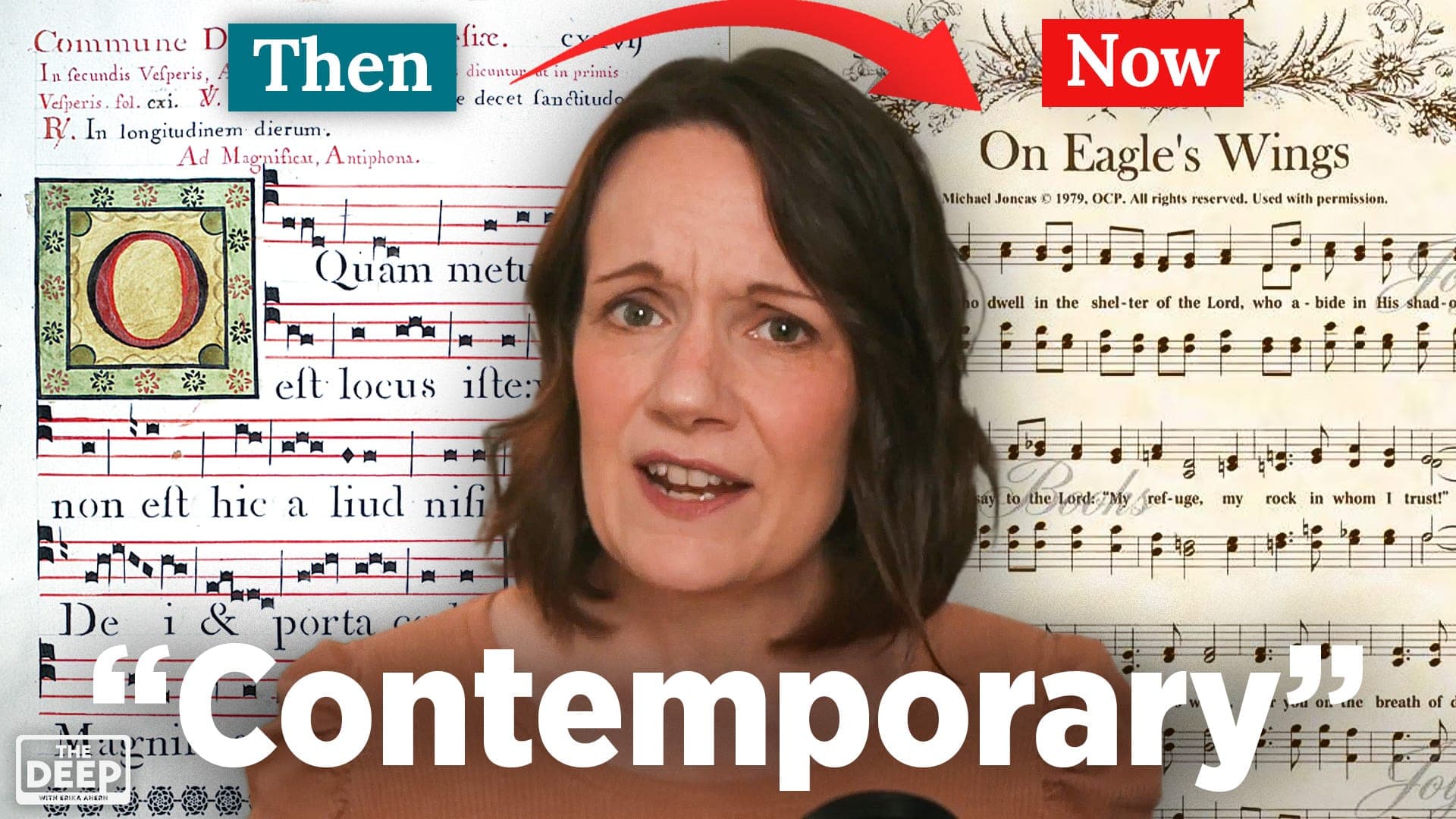
They're ready to give their lives for the church, and they can't do it without you. Young priests may not share the same politics or playlists as their elders. They might prefer chant to gather us in. They might talk more about the real presence than the recycling drive. And guess what? That is exactly what the church needs, because whatever we were doing for the last 60 years, sure the heck wasn't working.
Renewal rarely looks like innovation. It usually looks like someone rediscovering something ever ancient and ever new, rediscovering Christ himself. So, next time you hear someone sigh about the vocations crisis, tell them the whole story. Yes, there are fewer priests, but they are stronger and more clear-eyed than ever. And together with an on-fire Catholic laity, they will renew the face of the earth.
If you loved this episode, be sure to subscribe and hit the notification bell. Better yet, share it with your favorite priests. The Deep drops a new episode every Thursday at 4 p.m. Eastern.
.jpg&w=3840&q=75)