Why Don't Pro-Abortion Catholic Politicians Get Excommunicated?
Why don’t Catholic bishops excommunicate pro-abortion politicians? In this episode of The Deep, Erika digs into what excommunication actually means, why bishops rarely use it, and the forgotten story of one powerful politician who was excommunicated, repented, and returned to the Church.
Transcript
Read the full transcriptAuto-generated · 3,279 words
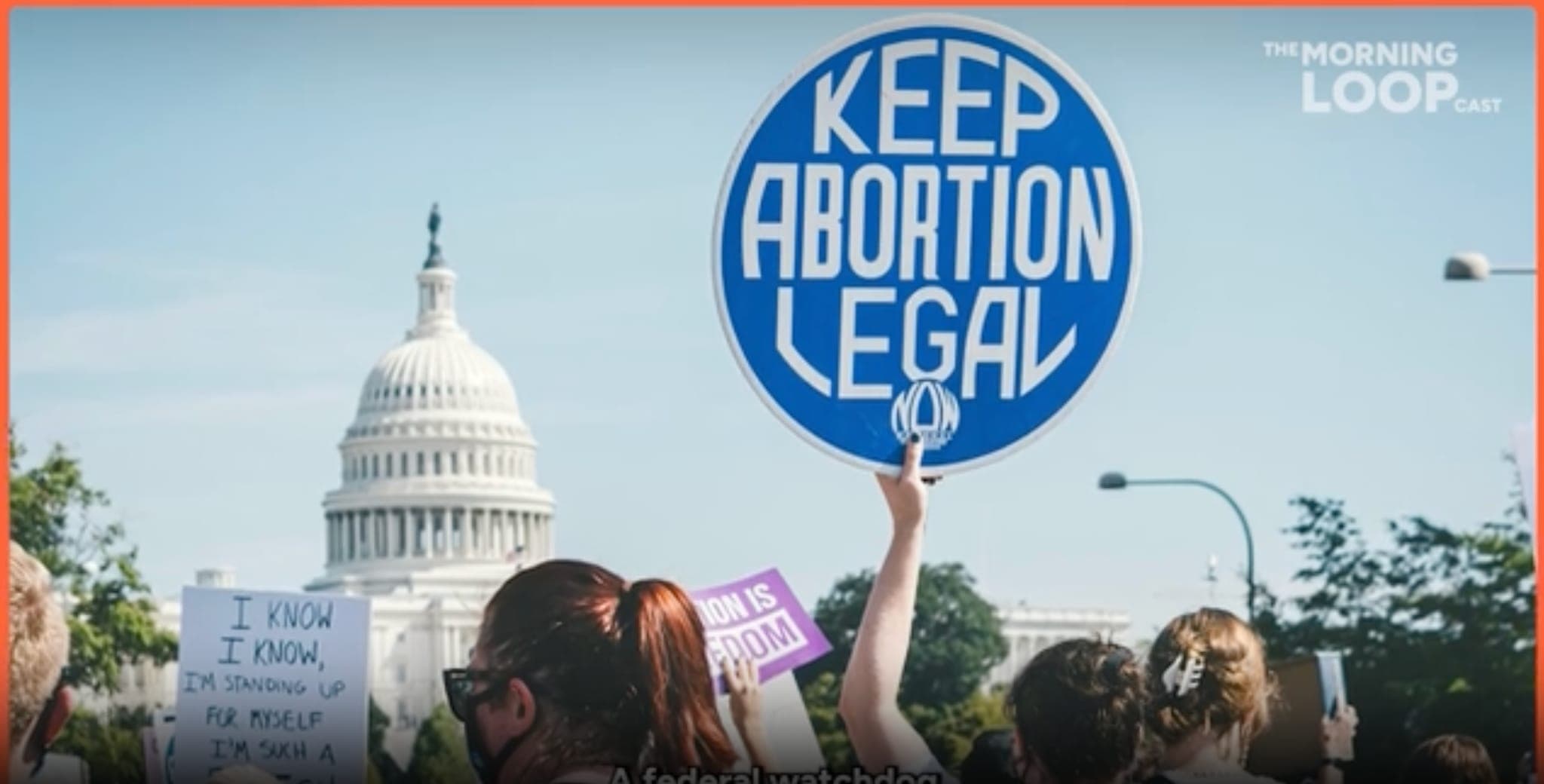
The governor of Massachusetts just signed one of America's most radical abortion bills into law, allowing abortionists to kill unborn children at any point during pregnancy for any reason. Maura Healey received the applause of dozens of activists as they publicly celebrated. Following the signing party, Healey's office put out a statement citing her Catholic faith. As a proud Catholic, Shealey's office put out a statement citing her Catholic faith. She believes everyone is deserving of kindness and empathy, especially in their time of need.
Well, everyone except the neediest people of all. The thing is, none of this was surprising. The truth is that American Catholics have come to expect Catholic Democrats, and even some Republicans, to be both personally and politically in favor of abortion. They even use their Catholic faith to justify it. And sure, this is a scandal, technically. But for some reason, even in the most scandalous instances of this, many Catholic bishops seem reluctant to issue anything more than general statements on church teaching.
It seems like church leaders wish everyone would just move on. To Catholics, it seems like maybe human life isn't that important after all. Maybe celebrating reproductive rights is, in fact, well within the range of what a proud Catholic can do and still go to Mass and receive the Eucharist. So, how did we get here? Why haven't more self-identified Catholics, politicians, celebrities, activists been publicly disciplined or even excommunicated over abortion, gay marriage, or anything else? Is there something we're missing as well?
Laity? Everyone wants to know, why haven't more Catholics been excommunicated over abortion? To the average Catholic and non-Catholic, excommunication just seems logical, given the very public nature of the scandal, the fact that politicians like Healy, Nancy Pelosi, and Joe Biden have not only supported abortion, but also profited politically off of that support. Not to mention the fact. That they have directly contributed to the deaths of millions of human beings. Why does it seem like there's no consequences? To push it further, why is the Church willing to excommunicate SSP ex-bishops, but not politicians who publicly promote laws antithetical to the faith?
With so much confusion, it always helps to step back and remember what exactly we're talking about. It all comes down to the Eucharist. And what excommunication is for? Let's start with excommunication. Excommunication literally means out of communion or outside communion with the body of Jesus Christ. Like mortal sin, excommunication is a total rift with God himself that occurs prior to the bishop recognizing it as such. Now, under the current code of canon law, there are two types of excommunication. Latte Sententiae, which takes place automatically upon the commission of a particular crime, and Ferende Sententiae, which is imposed after the bishop has warned a person, but that person keeps offending anyway.
Ferende Sententiae excommunication requires a long formal process, but in the end, it all comes down to this. The Church publicly recognizes a reality that has already tragically taken place. A Catholic has separated him or herself from communion. A formal excommunication, saying the reality of the situation out loud, is first and foremost intended to reconcile that sinner to God. You can't repent if you're not convicted of your sin, and a formal excommunication is primarily meant to bring home the reality of what you have done.
So, what would an excommunication practically mean for a Catholic? Once delivered, the excommunication forbids that person from receiving the sacraments and holding any kind of governing office in the church. And remember, the offender always holds the key to release from that excommunication. The public nature of Ferende Sententiae Excommunications is meant to motivate him or her to return home. But there's another, often unmentioned purpose for a public declaration of excommunication. It teaches the faithful that the person's actions or preaching contradict the teachings of Jesus Christ.
The bishop sees that the public scandal calls for a public penalty as a corrective and a healing measure for the entire church, not just the salvation of the offender. Now to return to the case of abortion and politicians. To the average lay reader, paragraph 2272 of the Catechism seems pretty clear. The Church attaches the canonical penalty of excommunication to abortion. A person who procures a completed abortion incurs excommunication latte sententiae by the very commission of the offense and subject to the conditions of canon law.
So, the logic goes, when a Catholic politician promotes or signs a law that creates the conditions for more abortions, more deaths, he or she makes herself an accomplice in procuring more abortions. Haven't they excommunicated themselves? And the next logical conclusion is, why aren't bishops declaring more late sententiae excommunications, or even formal excommunications? It's because excommunication is actually a really technical canonical penalty. Canon law requires bishops to make a very narrow reading of that word accomplices. To earn an excommunication, Catholics must aid in a particular act.
In this case, those politicians would have to actively aid in performing a particular abortion. As the Pillar explained in the case of Maura Healey, quote, this is different from the circumstance of having created or facilitated the conditions, even the necessary conditions, by which a particular abortion is procured. So, excommunication might be out. But that being said, excommunication is... It is just one of the many medicines in a bishop's doctor bag when it comes to the souls in his care. Canon 915 offers another option.
Bishops can decide that politicians who consistently and publicly support and benefit from supporting abortion are showing, quote, obstinate perseverance in manifest grave sin. In that case, they can bar someone from receiving the Eucharist in their local diocese. As when Bishop Joseph Martino announced to the USCCB that then-Vice President Joe Biden should not present himself for communion in Scranton, Pennsylvania. Bishops can also issue private warnings either in conversation or documented in a secret diocesan archive, and to be fair, the faithful may never hear about those.
If someone's words or behavior are causing scandal, the bishop can also formally and publicly rebuke her and demand a retraction. If warnings fail, bishops might proceed to a penal precept, which basically boils down to the bishop saying, I formally order you to stop doing X or recant what you said about Y, and if you don't, here is a specific penalty that will happen, for example, interdict or canon 915. So, the question remains, with all of these tools at their disposal, how did the church in America get to this point?
The point where Catholic politicians have become so bold and so lost that no one is surprised when they publicly and insistently cite their faith as the justification for creating the conditions for the deaths of millions of unborn children. You might remember this story. After Roe v. Wade was overturned in 2022, Representative Rosa DeLauro of Connecticut led a coalition of 31 Catholic Democrats on the Hill in ...in declaring their unconditional support for abortion. They even cited the Catechism and quoted St. John Paul II in their 2023 statement.
In response, the United States Conference of Catholic Bishops collectively rebuked them in a statement signed by one brave man, Bishop Michael Burbage. His courage was striking, but bishops' conferences are not authoritative. Only the local bishop, where a Catholic resides, Hold spiritual authority over that person. And zero out of those 31 politicians, as far as I can discover, were publicly called out by name by their own bishop for signing that June 2023 statement, or, in most cases, for their decades-long records of pro-abortion politics.
Only Archbishop Cordelione of San Francisco seemed to have taken the abortion scandal to its logical conclusion. In 2022, he did invoke Canon 915, and actually imposed a Eucharistic disciplinary measure on Nancy Pelosi, rather than just issuing another letter or a statement. Cordelione formally notified Pelosi that she was not to be admitted to Holy Communion because of her public advocacy for abortion, and he had repeatedly attempted to persuade her to change her position and had warned her in April 2022 that, absent her repentance, He would bar her from the Eucharist.
His decree made the remedy explicitly restorative. The prohibition would remain until Pelosi publicly repudiated her support for abortion and received sacramental absolution. While hundreds of local, state, and federal-level Catholic representatives have publicly supported and campaigned on their support for abortion, fewer than a dozen have ever been publicly rebuked in this way. Other bishops who took this courageous step include Bishop Thomas Paprocki of Springfield, Illinois, and his predecessor, Bishop George Lucas. Then-Archbishop Raymond Burke of St. Louis also barred pro-abortion John Kerry from communion in his archdiocese.
There have been instructions from Rome in this regard. In 2004, then-Cardinal Ratzinger wrote to the American bishops regarding the grave sin of abortion or euthanasia. When a person's formal cooperation becomes manifest, understood in the case of a Catholic politician as his consistently campaigning and voting for permissive abortion and euthanasia laws, his pastor should meet with him, instructing him about the Church's teaching, and informing him that he is not to present himself for Holy Communion until he brings to an end the objective situation of sin and warning him that he will otherwise be denied the Eucharist.
Ratzinger continued, When these precautionary measures have not had their effect, or in which they are not possible, and the person in question with obstinate persistence still presents himself to receive the Holy Eucharist, the minister of Holy Communion must refuse to distribute it. So, while those few brave bishops have gone public with their corrections, it is entirely possible that the vast majority have simply kept their rebukes private. In that case, all we see as the laity are the effects. Not only do we see a lack of repentance, but we have seen over the decades the majority of Catholic politicians doubling down and becoming more pro-abortion than before their bishops might have made these private interventions.
What we do know is that no American Catholic bishop has formally excommunicated a Catholic politician for promoting abortion. And that makes what happened in New Orleans more than 60 years ago even more extraordinary. In 1962, Leander Perez was a state judge and political boss of Plaquemines Parish in Louisiana. Negroes, he said, are, quote, animals right out of the jungle. Passion, welfare, easy life, that's the Negro. End quote. Perez, along with other Catholics like E.W. Gravelette and B.J. Gaylot, lorded their racist views over the county's nearly 4,000 black citizens.
Because of him, black people essentially couldn't vote or get decent housing, and their children certainly could not attend school with white kids. Perez was also in full communion with the Catholic Church for decades. Until Archbishop Rummel decided to act. As early as 1949, Rummel had publicly denounced segregation as contrary to the Catholic faith. In 1953, he specifically rebuked Perez and his cronies for forcing Catholic schools to stay segregated. But Rummel wasn't a 100% hero here. Even after the 1954 Brown v.
Board of Education decision, Rummel never took action to actually desegregate the New Orleans Diocese Catholic schools? Many Catholics were frustrated with the church's failure to discipline Perez. In a letter published to the Louisiana Weekly, a Catholic mother described herself as devout and was appalled at the archbishop's failure to act. She reminded him of his 1949 pastoral letter that had declared segregation morally wrong. In 1956, Rummel publicly threatened to excommunicate Perez and his cronies. They retaliated, not only by refusing to integrate Catholic schools, but also by pulling their church donations, organizing protest rallies, and even staging a cross burning outside the Archbishop's own residence.
And that kept up for another six years. Finally, in 1962, when he was 85 years old, Rommel announced that the Archdiocese Catholic schools would finally admit black students. And he separately ordered Catholic lay ministers, activists, and politicians to make it happen. Many of them refused, and on April 16th, Rommel excommunicated Perez, Jackson G. Rico, who was the secretary of the Association of Catholic Laymen, and Mrs. B.J. Gallot, an activist, for refusing to obey.
That fall, 104 black children were admitted to the city's Catholic schools. But the story doesn't end there. Monsignor Joseph Piskevich, who delivered the written notice of excommunication to Una Gaylot, begged her to pray for divine guidance, to repent for her views, and offered to help her do so. But Mrs. Gaylot continued to hold that, quote, God demands segregation, and she died having never reconciled with the Catholic Church. Rico was barred from walking his daughter down the aisle at her Catholic wedding.
And there's no evidence that he ever returned to Holy Communion. Leander Perez also seemed to persist in his defiance, joining the Wallace movement, and appearing on national television to defend segregation. Judge Perez is considered by many as a symbol of racist reaction.
Indeed, he has been excommunicated by the Catholic Church. And he continued to insist he wasn't racist. In the first place, I am not a racist. He seemed to be going down the same path as his fellow excommunicants. But when Perez died suddenly of a heart attack in 1969, the new Archbishop of New Orleans issued a statement that shocked Catholics across the country. Quote, There was a reconciliation of Mr. Leander Perez with the Church and the Catholic Church. Over a year and a half ago, in conformity with the injunction and with the intention of Archbishop Rummel of saintly memory, who imposed the penalty, and in consultation with Monsignor Plouche, who had communicated the penalty, I accepted the retraction of Mr.
Perez. He had been receiving the sacraments since his reconciliation. May he, and all the faithful departed, rest in peace. The excommunication had done its work. Not because New Orleans integrated, but because Leander Perez repented and came back to the Holy Catholic Church. Today, we have gone nearly 70 years without a sitting American elected official being formally excommunicated or even placed under interdict by his or her bishop. And that's understandably confusing, because since then, Catholics have risen exponentially in prominence as lawmakers, judges, and in other elected offices.
In the 1980s, politicians like New York Governor Mario Cuomo were assuring Catholic voters that they were in no way beholden to Catholic bishops, to church teaching, or even to the natural law on any matter. And in part because of politicians like Cuomo and Ted Kennedy, who were never directly reprimanded, we have experienced a major shift in the Catholic Overton window. We even now have Catholic politicians and activists Who say being pro-life and supporting abortion regulation are actually contrary to the Catholic faith.
When the USCCB announced plans to vote on drafting a document on communion and dissenting Catholic politicians, including Biden, Cardinal Luis Ladaria, prefect of the Vatican's Congregation for the Doctrine of the Faith, warned them that they should first make sure they were unanimous as a body, lest it become a, quote, source of discord. ...rather than unity within the Episcopate and the larger Church in the United States. That year, Monsignor Charles Pope, just before the USCCB decided not to draft that resolution, gave what I think is the most charitable explanation of the delay in addressing the phenomenon of a Catholic dissenter in the highest public office in the land.
There is, he wrote, growing consensus among the bishops, at least the ones I've talked with, that a general teaching addressed to all the faithful. ...on the worthiness to receive Holy Communion is needed. For indeed, there are any number of people on a given Sunday morning in parishes who should not present themselves for Holy Communion. Monsignor Pope was prophetic. The bishops did, in fact, draft a document, but it was a general pastoral statement on Holy Communion. It assiduously avoided naming any individual politicians or mandating the denial of communion.
And simply restated that discipline is the direct responsibility of local bishops in their respective dioceses. And days before the bishops voted to approve the document, President Joseph Biden took communion at Mass at St. Patrick's Church in the Diocese of Rome. It was just a day after he announced that Pope Francis had told him privately that he should continue receiving the Eucharist as a good Catholic. In an interview after that Mass, the celebrant, Father Ciccone, said Biden's pro-abortion position and whether to administer communion.
was not an issue for him or for the parish. Quote, communion is what brings us together in the Lord. None of us are pure and perfect. We struggle through life. We're all saints and sinners. And when you're a public figure, you have to make certain decisions, especially in a democracy, on behalf of more than just your own personal feelings, he said. And at this point, I'm going to be frank. I love the bishops. I love the church. And I find the entire approach is very important.
I love the church. I love the church. I love the church. I love the church. Baffling. And I struggle to understand, too, the long-term vision. Would the bishops of the 1960s and 70s look at the church today and Catholic politicians today and think, you know, that decision to stay quiet about Mario Cuomo and Senator Joe Biden, that worked out really well. Catholics love the Eucharist more than ever. They're more staunch defenders of life than ever. They're more engaged than ever in evangelization.
Cardinal Ladera told the bishops to prioritize unity, which is one of the marks of the church, but I see an American church more fractured now than when John F. Kennedy was elected. Monsignor Pope said the bishops wanted to avoid public misunderstandings and making martyrs of Catholic politicians, and I get that, but it seems like the Catholic public is more confused than ever. The authority to loose and to bind belongs to the heirs of St. Peter. The laity shouldn't think about excommunication or sacramental penalties the way we think about impeachments or removal from office.
And we can't demand bishops answer to us the way our elected politicians should answer us. They are our fathers, not our employees. That being said, there is something we certainly can do. Laity cannot excommunicate dissenting Catholic politicians, but it is absolutely our responsibility to fire them. The popular clerical formulation is that we pray, pay, and obey, and I would like to add one more duty to that list. We pray, pay, Obey, and we run the political order. We can wonder and weep at the apparent lack of leadership from our spiritual fathers.
We can try to understand them better by understanding what excommunication actually is, and our history with it, and what Canon 915 actually says. We can ask them, why Leander Perez and not Joe Biden? But we need to take our confusion and order it correctly. It is our duty to bring our faith into the public square. And to clearly, firmly, and lovingly labor to divest these dissenting Catholics of all temporal power. They do not represent you, they do not represent the Church, and they are the allies of death, discord, and the breakdown of the common good.
So let our spiritual fathers look to their souls. We must look to their victims. If you liked this episode, be sure to subscribe to the LOOPcast. We bring you a new episode of The Deep every Thursday at 4 p.m. Eastern.
.jpg&w=3840&q=75)