Monte Cassino: Beyond the Ashes
Visit the glorious and imposing hilltop abbey founded by the renowned St. Benedict. Monte Cassino has been destroyed and restored four times over the centuries and stands today as an enduring symbol of faith and perseverance.
Transcript
Read the full transcriptAuto-generated · 985 words
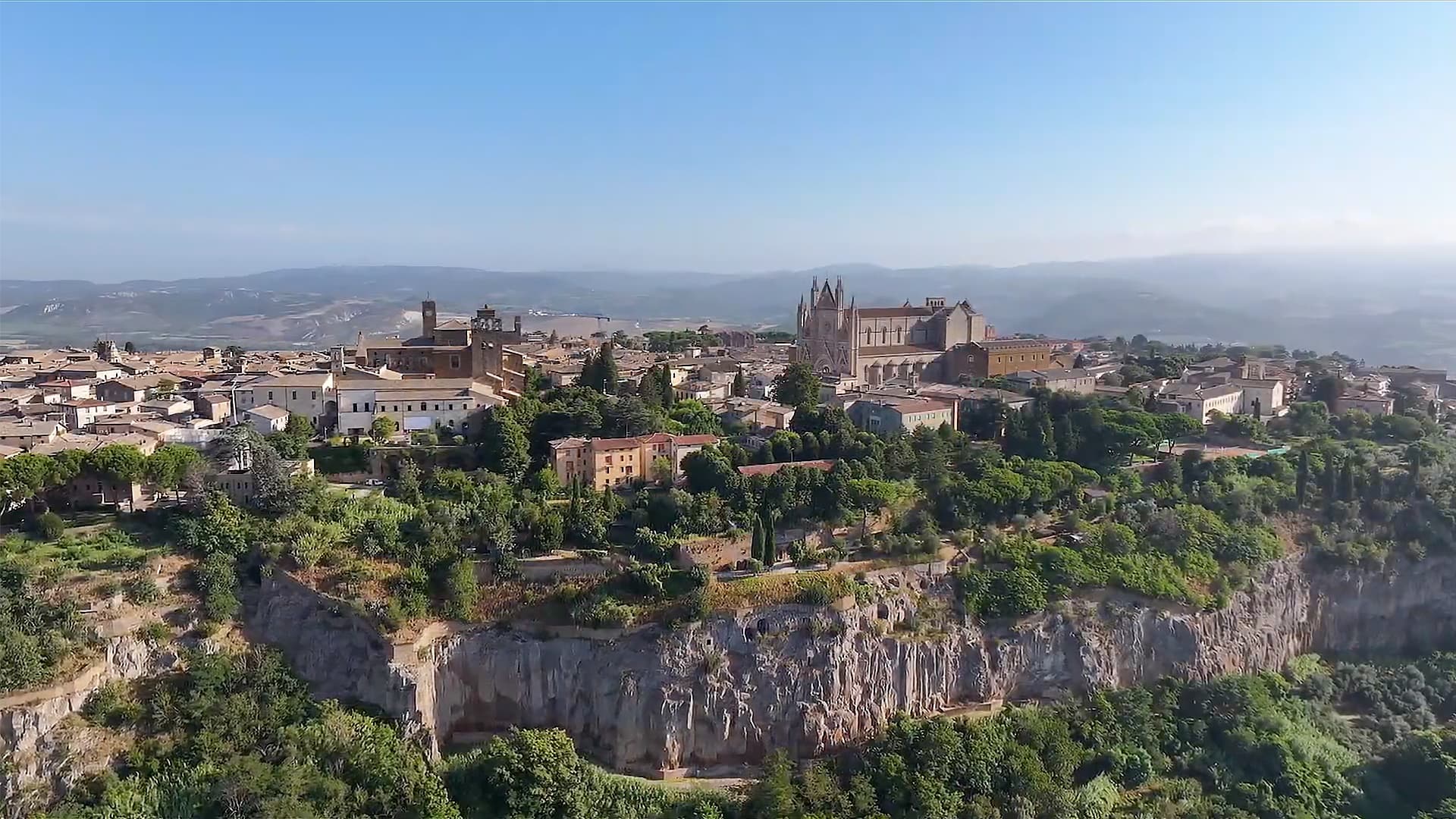
There is a place where time seems to hold its breath. A massive silhouette emerging from the mist, perched on a jagged spur of rock. It watches over the valley like an eye that never sleeps. For centuries, travelers looked upon it with awe and devotion.
They called it the White Giant, but its skin of stone hides deep scars. Four times it was erased, crushed, burned, betrayed. Yet, every time the world prepared its funeral oration, the giant began to breathe again. Look for a myth within these walls. Look for history. We're in the heart of Italy. This is the abbey of Monte Cassino.
Monte Cassino has faced four major destructions throughout its history. The first occurred just a few decades after the death of Saint Benedict. Tradition dates this event to the year 577. This first destruction was carried out by the Lombards, a Germanic tribe, an event that Benedict himself had prophesied. According to the stories, a friend found Benedict weeping and asked him, Why are you crying? Benedict replied, The Lord revealed to me that what I have built will soon be destroyed, but no human lives will be lost.
Fourth destruction happened just over 80 years ago, during the Second World War. Between these two events, there were two others, one in the 9th century at the hands of Saracen invaders, where the abbot of that time, Abbot Bertario, died as a martyr, and then a massive earthquake in 1349.
And yet, every single time, the giant returned to face the sun. Its motto, cut down, it grows back stronger, is more than just a decoration. It's the genetic code of this mountain. It all began in a sparse room inside a tower.
When Benedict left the town of Subiaco and arrived here at Monte Cassino, he found pagan temples, but he also found an old Roman tower. He decided to place his personal cell and his living quarters inside that tower. This is the place that tradition identifies today as the actual cell of Saint Benedict.
Here, Benedict wrote the Rule, a manual that would give a soul and a sense of order to the entire European continent. The Rule of Benedict is often summarized by a phrase that isn't actually in the text itself, and which Saint Benedict probably never wrote, the famous Ora et Labora, which means pray and work.
We usually add a third command, the Latin word lege, or read. This is because reading, especially the spiritual reading of God's Word, but also broader academic study, is a vital value in our spiritual experience. We could even add other commands, such as welcome, because hospitality has always been a core value in our tradition.
However, beyond the individual verbs, I believe the most fundamental part is the word and that connects them. There is a deep desire to hold together and unify different aspects of the world. It is not always easy to balance work and prayer. People in everyday life, and even those of us in monasteries, experience this difficulty. But Benedict offers us a unified way of life.
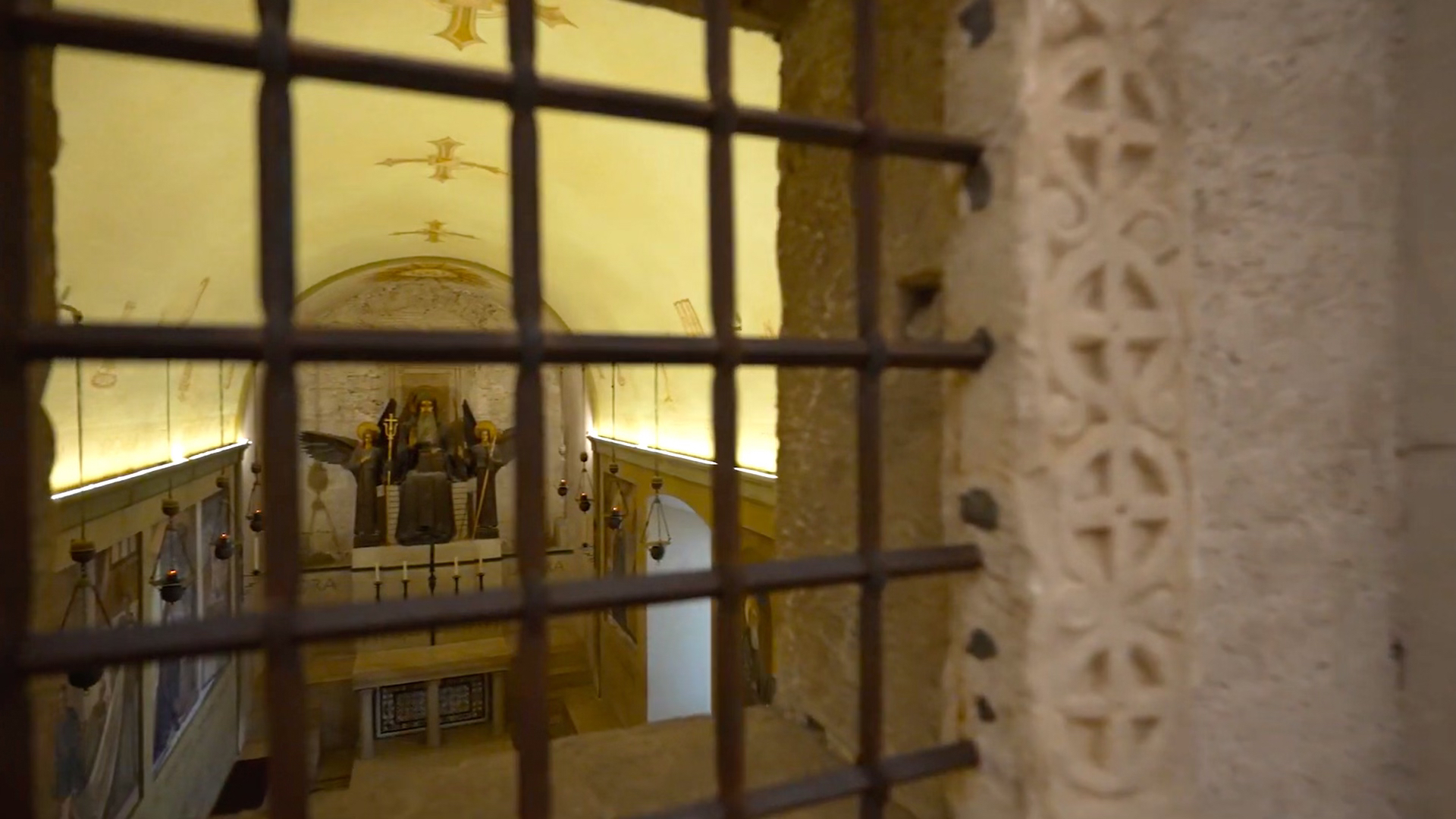
This unity was reflected in his bond with his sister, Scholastica. According to tradition, they were twins, not just by blood, but in spirit. Tradition tells us that since Benedict and his sister Scholastica loved each other in life, they were not separated in death. Therefore, they are buried in the same place. In fact, they now rest together inside the same urn within the oratory of St. John the Baptist. On February 15, 1944, the thousand-year beauty of the white giant made it a target.
In just a few hours. Tons of explosives turned prayer into dust. This was the result of a tragic error of judgment by the Allied forces, who mistakenly believed German troops had turned the abbey into a stronghold, but there were no soldiers inside, only monks and hundreds of terrified civilians who had sought sanctuary within these sacred walls.
Many of whom perished beneath the ruins of their last hope. Yet months earlier, someone had already played a hand against fate. In mid-October 1943, two German officers came to Monte Cassino at almost the same time and warned Abbot Di Amare that the monastery was in grave danger.
As a result, a massive effort began. We organized wooden crates, and the soldiers, along with many civilians who had been seeking refuge in the monastery for months, worked together to build these containers. About a hundred trips were made between Monte Cassino and Rome to save our treasures. On December 8, 1943, the library and the archives of Monte Cassino were officially handed over to the Vatican for safekeeping.
And as everything collapsed, the impossible happened at the very heart of the sanctuary. By what we see as divine providence, a shell fell directly on the burial site of the saints, but did not explode. Because of this, the urn containing the mortal remains of both Benedict and Scholastica was saved, and is still preserved today.
From these ashes, Monte Cassino and the figure of St. Benedict emerged, not just as a site of reconstructed stone, but as a supreme symbol of peace and resilience for a wounded Europe. This mountain became the spiritual lighthouse for a continent which, having faced the abyss of destruction, sought a new beginning, built on unity and brotherhood.
On October 24, 1964, Pope Paul VI came here to Monte Cassino to re-consecrate the church after it had been rebuilt following the bombings. On that occasion, the Pope proclaimed St. Benedict as the patron saint of Europe. He defined Benedict as an evangelizer, a witness, and a messenger of peace.
The giant is still there, standing on its peak, watching the horizon, a silent witness to a past that refuses to die, and a guardian of a future that, despite everything, continues to grow.