What Happens If You Skip College and Become a Plumber?
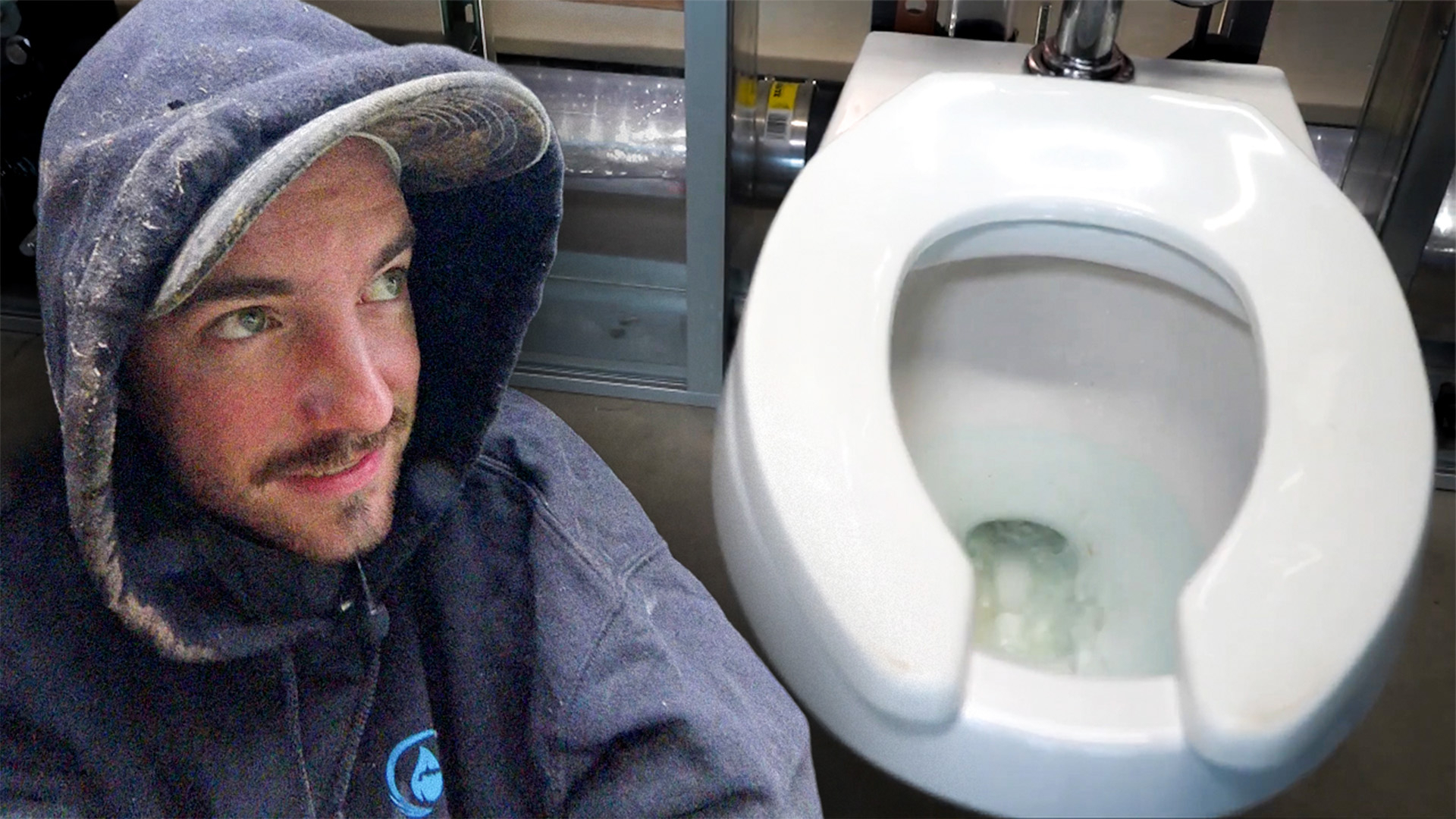
I’ve always wondered what my life would be like if I skipped college and went the trades route. So I called up a local plumber in Indiana and joined his crew for the day. From house calls to hands-on repairs, I got a real look at what the job is actually like — the pace, the pressure, the skills it takes, and the question everyone is asking right now: Is becoming a plumber worth it?
Transcript
Read the full transcriptAuto-generated · 1,583 words
All right, we're going in. Come on in. Oh, yeah. Yeah, go through there. Yeah. This is me realizing that plumbing requires much more flexibility than I thought. So, I imagine you've got to get over claustrophobia pretty quick if you're a plumber. Yes. Yeah, can't be a plumber if you're claustrophobic, that's for sure.
For years now, I've been hearing from friends and reading news headlines about how college just isn't the safe bet it used to be. High tuition, crushing student loan debt, AI replacing jobs. So, it wasn't surprising to see that the next generation of workers have been enrolling in trade school at record rates, looking for work that's tangible, in demand, and harder to automate. I took the college route, but I often wonder what my life would be like if I went into the trades.
So, instead of theorizing, I called up a local plumber, and for one day, I stepped into his world, seeing the sights, doing the work, and yeah, smelling the smells. This is Time Across America, and today, I'm a plumber.
It was bright and early when I showed up to the yard. First order of business, stocking the truck for the day. We've got PEX fittings back here, supply lines, toilet fill valves and toilet parts and gaskets, soap bubbles and stuff for gas leaks, P-traps. There's a plunger. Every plumber has to have a plunger. Up here, you've got a bunch of your PVC fittings. Power tools and stuff go up here. We're doing one water heater later today that's a 40-gallon. This is the sewer camera.
This is what we run through drains if we need to be able to see what's going on and things like that. How do you finance? I am very grateful that I didn't have to. to finance. You hear me talk about growing organically and so I didn't have the camera for the longest time and I just dealt with what I could do with what I had. So you've just reinvested in the business? Yep, so I just reinvested in the business and then you know slowly way to save up more money and then buy the next tool and save up more money and buy the next tool.
After a mandatory blue collar stop at the gas station we were off to our first job of the day installing a new dishwasher. As we were working, I struck up a conversation with Braden, a plumbing apprentice working for Drew. Not only did he apprentice when many of his peers went away to college, Braden actually got his start in high school through a work-based learning program. Indiana has a robust program getting students hands-on experience in fields like electric, plumbing, and construction. This was key in him deciding to go the trades route.
School is at 5 to 8, either Mondays or Wednesdays, or once a week. Okay. Four years long. Nice. But then the rest is just out in the field, like, you have to just learn. You need on-the-job hours to then get your certificate. You need about 8,000 hours. 8,000 hours? Oh, wow. Was the thought ever for you, like, hey, I want to do college, or was it always, like, hey, I think I'm going to do something different? I mean, I was good in school, but I was like, I really don't like it enough to go four more years.
I like working with my hands. I'm sure he also liked not being in debt and owning his truck outright. You dealt with anything nasty yet? Honestly, the nastiest things are probably kitchen drains or sink drains, because stuff gets down there. It doesn't flow like sewage does. For me, it's sewage ejectors, which are the grinder pumps in the basement that pump all the sewage up and out of the house. Ah, okay.
As we rode to the next job, I got to pick Drew's brain on his path to plumbing and eventually starting his own business. So, I did a plumbing apprenticeship. I worked for another company for eight years, and then after that eight years, I decided that it was time to do what's best for my family. The one way that I did go into debt was we took out a home equity line of credit on our home.
And so, that is how I started my business, was a home equity line of credit. So, I took the risk. And the risk, so far, has paid off. Drew started with just a pickup truck and a trailer back in 2020, and he is now up to four full-time employees with two utility trucks.
So, this is a family business. Yeah, it is a family business. So, my wife, she runs the behind-the-scenes stuff from the house. She did go to college, and she got her degree. Business and marketing. What did she think about you approaching her? Hey, let us take the leap. We are going to take out this loan. We are going to go all in on this business. Was she 100% all in? Was she nervous? What was that conversation like? Yeah, of course, she was a little nervous of like, what are we about to do here, and is this going to work out, and are you capable of running a plumbing business?
Are you capable, or are we capable of doing that, you know? And it was a lot. We did not have a kid at the time. We dumped everything we had into it to hopefully pay off. Drew is a part of the 130,000 plumbing businesses nationwide. The interesting thing about the plumbing industry is that it's highly fragmented. No single company holds a market share greater than 5%. So Drew's local small business is the standard for most plumbers across the country. And just like that, we were pulling up to our next job.
So, what do we have here? So, this one is supposedly a leak in a crawl space. Okay. I do not know exactly what we are getting into. This is deep. Is it? Yeah. Like, I might fall. Get skinny. That is... I am so impressed by that.
Are you? That was athletic, what you just pulled off there. That was life. All right, you just, yeah, get me going from here. I am a little shorter, so this might be tough. Yeah, it is a good different setting. All right, we are getting after it. Go low, like that. Or if you are trying to see it.
Everybody in? Yep. All right. Sounds like a plan here. Let's see what we got. So, I'll tell you, as you crawl through, Tom, just try to be as careful as you can from hitting. Got it. Some of the lines are disconnected, some of them are not, so. Okay. So, what's the problem with the homeowner? It smells like sewage, and they're not sure where it's coming from, so we're trying to figure out if there's an open drain, if there's, you know, something that needs to be replaced, or...
Now, I was coming into this, and I'm like, I'm curious what I'm going to take away, something that I did not expect about plumbing. Your level of flexibility is genuinely impressive. Which is sad, because I'm not that flexible.
So, we're going to take that drain. He just found the old condensate drain. The condensate drain for the furnace should be into that, and it's not. Go hard left, Tom. Okay. Drew, what's a stereotype about plumbers that is absolutely true?
Butt crack. No, I'm just kidding. No, that's actually the one biggest pet peeve that I have, is like, you can definitely feel the wind on your crack, so cover it up. Thank you. No problem. Pass the baton. After emerging from the darkness of the crawlspace, I started to feel like I was really getting it.
There's a certain satisfaction that comes with this kind of work. If you're a good contractor, and you know what you're doing, then most people are at ease, and are excited to see us there to fix the issue and problem, and I get good satisfaction from it, and walking away going, yeah, faucet didn't work, and we fixed that, or the toilet didn't flush, and we all know that we like to be able to use the bathroom and things like that, or take a shower, and so I feel like I've always been a servant, and I want to be able to help people in the community and do things.
And isn't that what it's all about? The American Dream. Working hard, providing a good service to the community, and building something for your family. There's probably, you know, a thousand, maybe a hundred thousand Druze all over the country that have the dream to start their own business because it can better their lives, it can better their families, they can provide a good service. And it kind of makes the world go around, makes the country go around. I feel like that's what's so great about America.
After a day with Drew, I think it's no wonder that the younger generation is turning to work like this that is simple, satisfying, and valuable. To me, it's a sign that the heart of American work is being revitalized, and maybe it never went anywhere, and we're just rediscovering it.